Call UsBook an Appointment

Full Mouth Rehabilitation

Full mouth rehabilitation in Woonona, make sense of your next steps

If many of your teeth are worn, broken or missing, or you have had a lot of dental work, you may not know where to start. Ask us what care is available for your situation. To ask, call us on (02) 4284 4486 or book online.

Fees, private health benefits and third-party payment arrangements vary. Please confirm current details before relying on an option.

Full Mouth Rehabilitation

Understand your treatment choices

Full mouth rehabilitation is a name for care that looks at several teeth together, and not everyone needs extensive treatment. The information below explains individual treatments so you can see which, if any, may be relevant to your teeth and gums.

Write down what you would like to ask about your teeth, gums and bite, and call us on (02) 4284 4486 to discuss your questions. For current fees, read Our fees and see our Patient offers.

Questions about the assessment

An X-ray can show damage inside a tooth. Ask your dentist whether an X-ray is needed and what it would help them understand. You can bring questions about decay, gum disease, worn or cracked teeth, or missing teeth to your appointment. This page sits within our Restorative Dentistry services.

Comparing individual treatments

Treatment with Tooth fillings repairs decay, and Root canal treatment treats a tooth that is infected inside. A crown covers a damaged tooth, while a bridge replaces a missing tooth; read about Crowns and bridges to compare them. Removable Dentures replace missing teeth and can be taken out. Gum health matters too, and Gum disease treatment explains what care can involve.

A dental implant is a metal screw, usually titanium, that is placed in the jawbone in place of a missing tooth root and can support a crown, bridge or denture. Implant treatment is usually done in stages over a few months, with about three months for the bone to grow around the implant.

If you are thinking about replacing many teeth, read about Dental implants and All-on-4 dental implants, and ask your dentist whether they suit you.

Teeth grinding and wear

Serious teeth grinding can damage or crack teeth and a custom-made mouthguard, known as an occlusal splint, can protect them. If you have noticed wear, Teeth grinding explains what a dentist looks for. Tell your dentist about any grinding you have noticed.

Asking about appointments

Dentures often take several appointments, a crown takes one or two visits, and an implant is done in stages over a few months. These examples describe those treatments separately. Ask your dentist how many appointments your proposed treatment needs; this page does not give a total duration for full mouth rehabilitation.

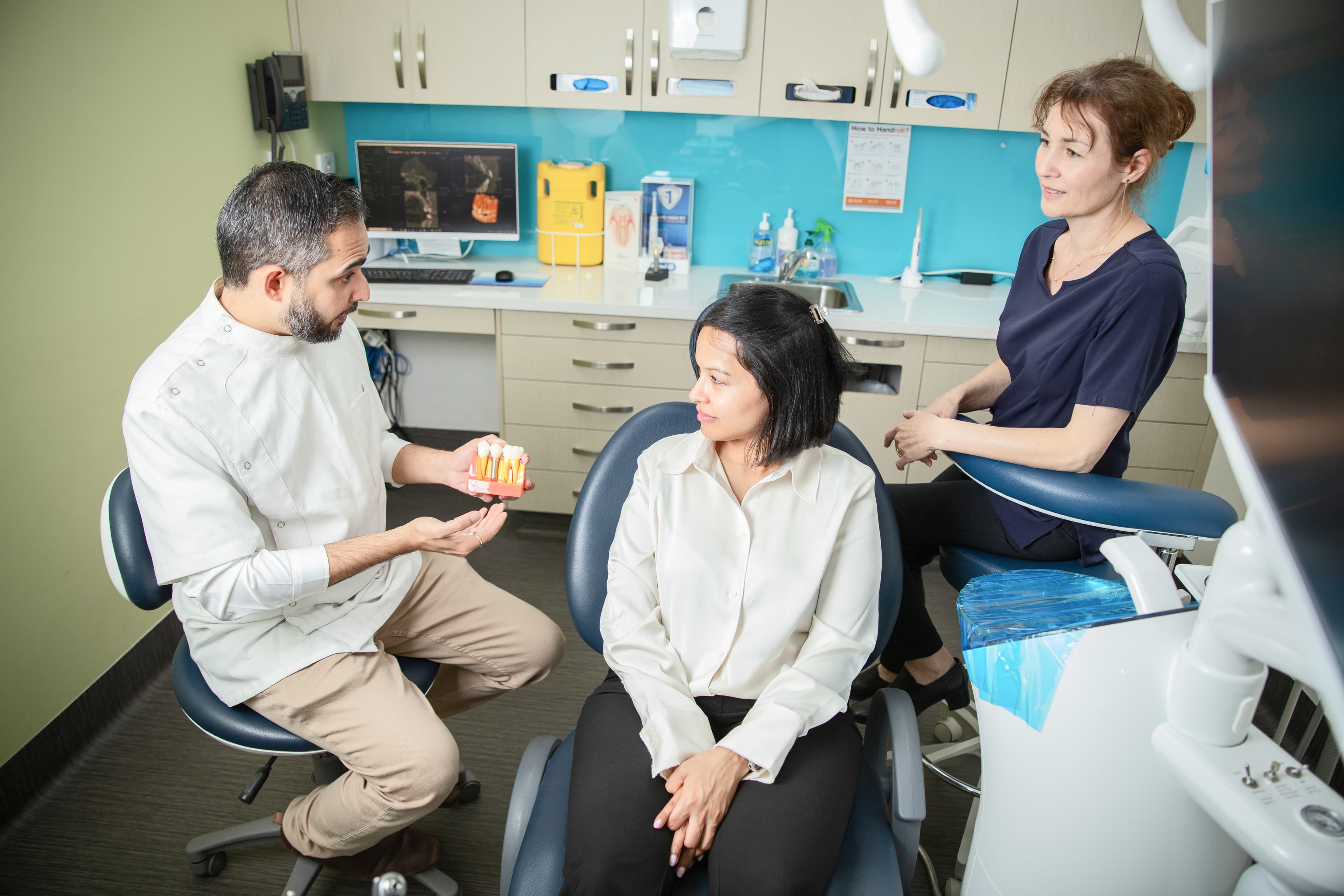
A dentist showing a dental model to a seated person in a treatment room.

Filling materials and sensitivity

For a filling, composite resin is a tooth-coloured material that can be matched to nearby teeth and bonded to the tooth. Fillings can become worn or chipped over time. A tooth may feel sensitive after a filling when you bite or have something hot, cold or sweet.

If sensitivity continues after a few days, see your dental professional again. Read about Tooth fillings and ask which material is suitable for your tooth.

Denture care

Dentures need care after they are fitted. Remove them for cleaning and use a soft toothbrush with mild soap and water; toothpaste can scratch their surfaces. Take dentures out before bed to let your mouth rest. Brush your gums and tongue each day, even if you have no teeth.

Most people take a few months to get used to dentures, and follow-up appointments may be needed to adjust the fit. Read about Dentures and ask your dentist how to care for yours.

Questions about costs and care

Before crown treatment, ask how many appointments you will need, what material will be used, what will be done to keep you comfortable, what the costs are and how long the crown may last. Read Our fees, our Patient offers and our Payment options, and call us on (02) 4284 4486 when you are ready to talk.

You can also read Understanding the choices in a treatment plan on our blog.

Treatment is personalised to your mouth, and you can pause or decline a proposed treatment after discussing the options and risks with your dentist.

Concerns to discuss with your dentist

Tell your dentist what you have noticed and what you would like to understand.

  • Worn teeth: Many of your teeth have worn down or chipped.
  • Several problems at once: You have broken, missing or decayed teeth in different parts of your mouth.
  • Bite concerns: Your bite feels uneven or uncomfortable.
  • A lot of past work: You have had many treatments and want to ask about care for your teeth now.

What a treatment plan should cover

Before you decide, you can ask for a written plan. It should set out the points below, so you can review them at home.

  • Your concerns: what the dentist found in your teeth and gums.
  • Your goals: which options could address what matters to you.
  • Appointments: how many visits the proposed treatment needs.
  • Fees: what each treatment would cost.

Frequently Asked Questions

Questions about Full Mouth Rehabilitation

These general answers can help you prepare questions for an individual conversation.

Full mouth rehabilitation is a name for a way of looking at your whole mouth, not one single procedure. It is used when several teeth have different problems and your dentist wants to see how the treatments could fit together. Which treatments end up in the plan depends on what the examination finds.

The Dental treatment guide explains that fillings, crowns, dentures and implants each do a different job. For one person the findings might point to two or three of them. For another they might point to a single repair. The service name alone does not tell you which of those is closer to your situation, so try not to read a long list of possible treatments as a list of things you will need.

Our restorative dentistry page is a good place to read first if you are still deciding whether to book. You do not need to settle on any procedure before you contact the clinic. A first visit can simply be about finding out where your teeth stand today and what, if anything, needs attention first.

    Related Care

    Continue exploring Restorative Dentistry

    1. Services

      Restorative Dentistry

      Restorative Dentistry information
    2. Practice

      Our Fees

      See dental fees
    3. Practice

      Patient Offers

      Read patient offer terms
    4. Restorative Dentistry

      Crowns and Bridges

      Crowns and Bridges information
    5. Restorative Dentistry

      Dentures

      Dentures information

    Ready to Book Your Next Dental Visit?

    Whether you're due for a routine check-up, have a dental concern or want to talk about a treatment, our Woonona team can help.