Call UsBook an Appointment

Teeth Grinding

Teeth grinding in Woonona, night-time signs and how a splint may help

If you wake with a sore jaw or a headache, or someone has heard you grinding at night, ask your dentist to check your teeth for wear. They explain what they see and talk through what may help. To book, call us on (02) 4284 4486 or book online.

Fees, private health benefits and third-party payment arrangements vary. Please confirm current details before relying on an option.

A dentist pointing to a dental X-ray on a computer screen with a colleague.

Teeth Grinding

Grinding often happens while you sleep

Many people grind or clench their teeth without knowing, often during sleep. Over time it can wear down the surface of teeth, chip them or leave your jaw sore. The reasons differ from person to person, so there is no single answer.

Your dentist checks your teeth for signs of wear and may suggest a custom night guard (also called an occlusal splint), which fits over your teeth to protect them. For current fees, call us on (02) 4284 4486 or read Our fees. You can also see our Patient offers.

What grinding means

Bruxism is the medical name for grinding or clenching that is not part of normal chewing. Adults and children can grind their teeth during sleep, and you might also grind during the day. If you grind in your sleep you may not know you are doing it, and your bed partner may be the first to notice.

Some people get no symptoms at all. Teeth grinding is one of the concerns we look at under General Dentistry.

Signs and symptoms

Symptoms can include cracked, chipped or loose teeth, damaged fillings, painful jaw muscles (especially in the morning), headaches or toothaches, and jaw joint problems. Some people see a doctor about headaches or a sore neck and find grinding is the cause. If a tooth has chipped or a filling has broken, Tooth fillings explains how a tooth is repaired, and your dentist can look for signs of wear at your regular Check-up and clean.

Triggers and sleep problems

Possible causes and triggers include emotional stress and anxiety, alcohol or caffeine, certain medicines such as some antidepressants, and stimulants. People who grind their teeth in their sleep may be more likely to have other sleep disorders such as sleep apnoea, and if a dentist finds sleep bruxism they may refer you to a doctor to be checked for sleep apnoea.

Tell your dentist about your sleep, stress and medicines.

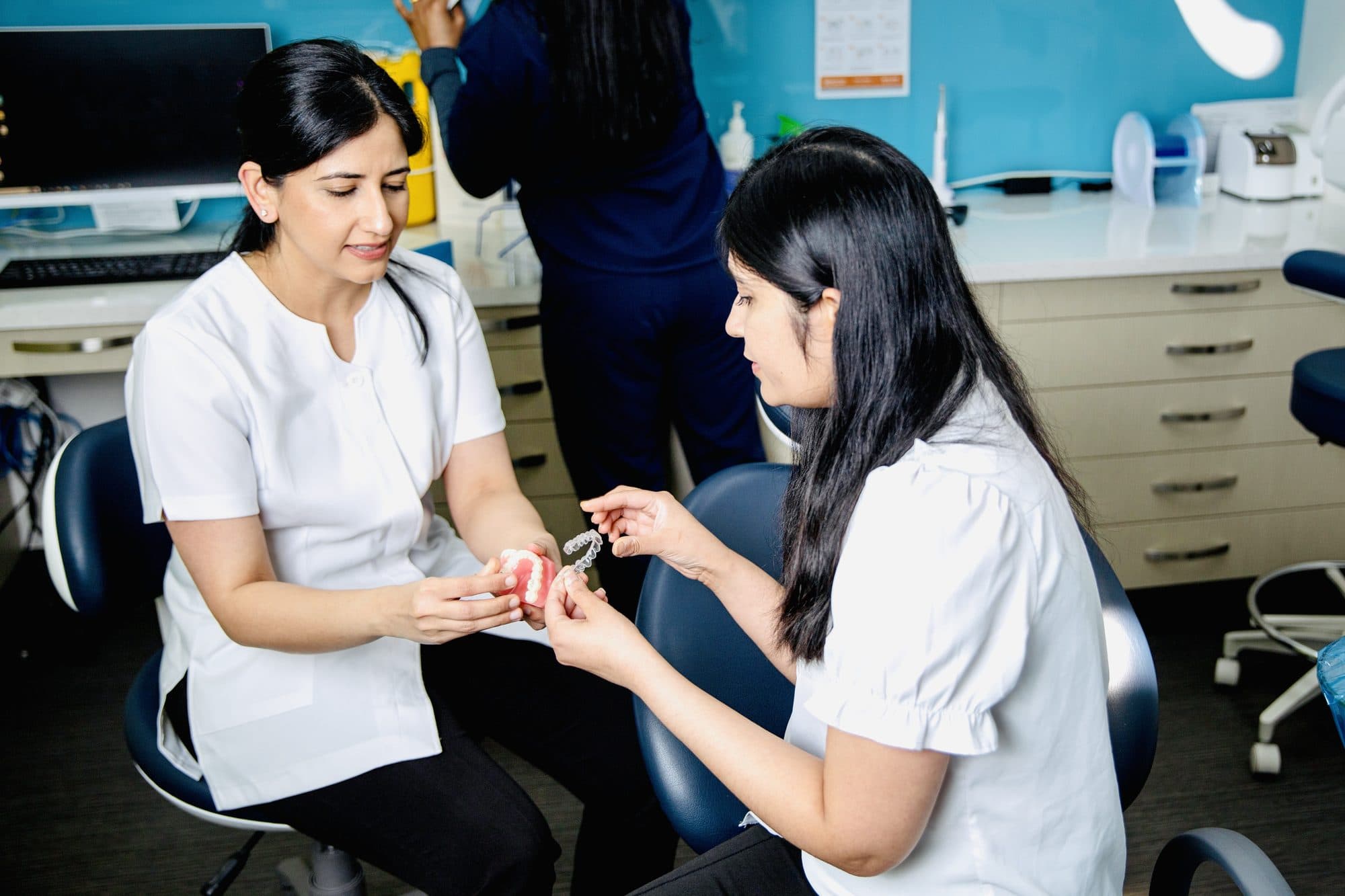
A dentist handing a small clear dental appliance to a seated patient.

Approaches to treatment

Not everyone who grinds needs treatment, and many children simply grow out of it. If you need help, there are two broad approaches. One manages stress and anxiety, for example with counselling, relaxation techniques such as mindfulness, good sleep habits and avoiding caffeine.

The other manages the physical effects, with a custom-made mouthguard known as an occlusal splint, dental treatment to repair damaged teeth, physiotherapy for jaw muscle pain, or medical treatment for linked conditions. It is common to use more than one approach, and your dentist or doctor can talk through the benefits and risks.

What a night guard does

A custom night guard protects your teeth by covering them while you sleep. It does not stop the grinding itself, so your dentist explains what it can and cannot do for you. Ask how the guard is made and fitted, how to clean it and how often it needs checking.

Read the Teeth grinding guide for a plain-English summary.

Follow-up and fees

There is no particular method to prevent bruxism, so it is important to find out about treatments that reduce damage to your teeth. Mild grinding may cause little harm, but more serious grinding can damage or crack teeth, cause facial pain and disturb your sleep.

A cracked tooth may need a crown, and Crowns and bridges explains what that involves. If your child grinds their teeth, young children sometimes do and usually grow out of it, and Kids dentistry covers visits for children.

You can ask for a pause or decline a proposed treatment after discussing the options and risks with your dentist.

Signs worth a visit

These signs of grinding can have other causes, so they are a prompt to ask your dentist to check your teeth rather than a diagnosis.

  • A sore jaw: Your jaw or the muscles near your ears feel tight or tired when you wake.
  • Worn or chipped teeth: Your teeth look flatter or shorter, or have small chips.
  • Morning headaches: You wake with a headache and it keeps happening.
  • Someone has heard you: A partner or family member says you grind at night.

What happens at your visit

Your dentist looks for signs of wear and asks about your symptoms, sleep and general health. You then hear what they found and which options might suit you.

  • A check for wear: Your dentist looks at your teeth, gums and jaw.
  • Questions about your habits: You talk about sleep, stress and anything else that may play a part.
  • Your options explained: You hear whether a night guard suits you and what it involves.
  • A follow-up: Your dentist suggests when to have your teeth checked again.

Frequently Asked Questions

Questions about Teeth Grinding

These general answers can help you prepare questions for an individual conversation.

You may not know you grind, because it often happens in sleep and a partner may hear it first. Teeth grinding guide explains that bruxism can also happen during the day. Being unaware is different from having nothing to assess: your account is one part of the picture, and the examination adds the rest. Grinding guide describes aching teeth, headaches and soreness after waking.

Not all wear comes from grinding. Acids can soften the tooth surface so it wears more easily, as the Tooth erosion guide describes. A shortened edge is therefore a reason for examination, not for choosing a night guard yourself. A simple description is enough: discomfort at breakfast, pressure while concentrating, or sounds someone else heard. Our check-up and clean page introduces the examination.

If you are still not sure, a short appointment is the simplest way to find out. You can describe what you have noticed in your own words, and the examination can then confirm, rule out or explain what is going on.

Related Care

Continue exploring General Dentistry

  1. Services

    General Dentistry

    General Dentistry information
  2. Practice

    Our Fees

    See dental fees
  3. Practice

    Patient Offers

    Read patient offer terms
  4. General Dentistry

    Check-up and Clean

    Check-up and Clean information
  5. General Dentistry

    Tooth Fillings

    Tooth Fillings information

Ready to Book Your Next Dental Visit?

Whether you're due for a routine check-up, have a dental concern or want to talk about a treatment, our Woonona team can help.