Call UsBook an Appointment

Dentures

Dentures in Woonona, understand your options for eating and smiling

If you have lost some or all of your teeth, or your denture no longer fits well, talk to your dentist about your options. They check your mouth, explain the choices and answer your questions. To book, call us on (02) 4284 4486 or book online.

Fees, private health benefits and third-party payment arrangements vary. Please confirm current details before relying on an option.

Dentures

Replacement teeth you can take out

Dentures are removable replacement teeth. A full denture replaces all the teeth on the top or bottom. A partial denture fills the gaps when you still have some natural teeth.

Your gums change shape over time, so a denture that once fitted well can become loose. Your dentist explains your options, including how dentures compare with bridges and dental implants. For current fees, call us on (02) 4284 4486 or read Our fees. You can also see our Patient offers.

Types of denture

There are three main types of dentures. A full denture rests on your gums and replaces all your teeth on the upper or lower jaw, or both. A partial denture replaces some of your teeth and is held in place by metal clasps around your remaining teeth.

An implant-retained denture is fitted onto implants in the jaw, and you can remove it. Dentures are usually made of acrylic resin, or of plastic with a lightweight metal frame, and each set is custom made to fit your mouth. They are part of our Restorative Dentistry services.

Fitting and healing

Making and fitting dentures often takes several appointments. If you are having teeth removed, an immediate denture may be an option. It is fitted on the day the teeth come out. It may need adjusting as your gums heal. Alternatively, your dentist might ask you to wait a few months after the teeth are removed so your gums heal and you need fewer adjustments once the dentures are in place.

Getting used to dentures

Wearing dentures can feel strange at first. Most people take a few months to get used to them. Start slowly with soft foods. Dentures can cause irritation or soreness and more saliva than normal, so book a follow-up if something rubs.

Once you are used to your dentures, see your dentist at least yearly to check that they still fit correctly, and a regular Check-up and clean is a good time to do that.

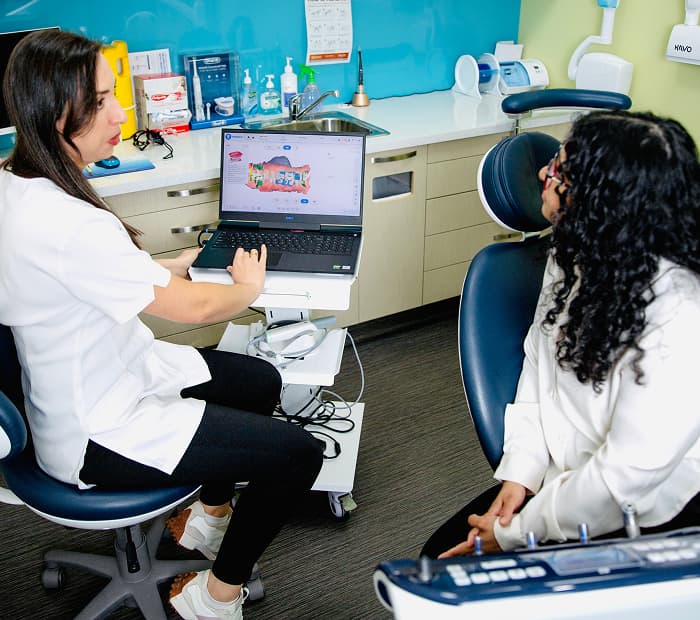
A clinician showing a digital image of teeth on a laptop to a seated patient.

Cleaning and daily care

Clean your dentures twice a day, in the morning and before you go to bed. Take them out to clean all surfaces with a soft toothbrush and mild soap and water, because toothpaste can scratch them, and leave them out overnight so your mouth can rest.

Even without natural teeth, brush your gums and tongue every day and keep up regular dental checks, to avoid inflamed gums and infections. See your dentist if you have bleeding gums or your dentures need adjusting.

Fit and follow-up

Dentures can make it easier to eat and speak and can help you feel more confident. If missing teeth are not replaced, the muscles in your face can sag, and dentures can help fill out your face. Read the Dentures guide for more detail, and ask your dentist about the benefits and risks for your mouth.

Alternatives to dentures

Dentures are one way to replace teeth. A dental bridge is fixed in place and cannot be taken out, but it needs healthy teeth either side of the gap, and Crowns and bridges explains how it works. A dental implant can support a crown, bridge or denture, and our pages on Dental implants and All-on-4 dental implants explain those options.

For a plan that covers many teeth, read about Full mouth rehabilitation, and read Understanding the choices in a treatment plan on our blog.

You can ask for a pause or decline a proposed treatment after discussing the options and risks with your dentist.

When to talk to us about dentures

You do not have to wait until a denture fails to ask about it. These are common reasons to book a conversation.

  • Several teeth are missing: You have lost a few teeth, or all of them.
  • Your denture is loose: It moves when you eat or speak.
  • Sore spots: Your denture rubs or leaves sore areas on your gums.
  • Chewing is hard: You avoid some foods because of missing teeth or a denture that does not fit.

What happens at your visit

Dentures are made for your mouth, so the process has several steps. Your dentist explains each one and what to expect at the next visit.

  • A check of your mouth: Your dentist looks at your gums and any remaining teeth.
  • Your options explained: You hear what the choices are and what each involves.
  • Impressions and fitting: Your dentist explains the steps to make and fit the denture.
  • Adjustments: Small changes after fitting are common, and you can book back if something rubs.

Frequently Asked Questions

Questions about Dentures

These general answers can help you prepare questions for an individual conversation.

A full denture rests on your gums and replaces all the teeth on the upper or lower jaw, or both. A partial denture replaces some teeth and is held by metal clasps around your remaining teeth. An implant-retained denture is fitted onto implants in the jaw, and you can still remove it.

Which one suits you depends on how many natural teeth you have left and how healthy they and your gums are. The Dentures guide explains the designs. Tell the dentist what you most want to change, such as eating comfortably or feeling more confident to speak, so the options are weighed against your own goals.

Dentures are usually made of acrylic resin, or of plastic with a lightweight metal frame, and each set is made to fit your mouth. If you want to know how implants work, our dental implants page explains them. You can bring a list of worries to your visit and ask the dentist to go through them one by one.

    Related Care

    Continue exploring Restorative Dentistry

    1. Services

      Restorative Dentistry

      Restorative Dentistry information
    2. Practice

      Our Fees

      See dental fees
    3. Practice

      Patient Offers

      Read patient offer terms
    4. Restorative Dentistry

      Crowns and Bridges

      Crowns and Bridges information
    5. Restorative Dentistry

      Full Mouth Rehabilitation

      Full Mouth Rehabilitation information

    Ready to Book Your Next Dental Visit?

    Whether you're due for a routine check-up, have a dental concern or want to talk about a treatment, our Woonona team can help.