Call UsBook an Appointment

Orthodontics

Orthodontics in Woonona, straightening teeth and improving bites for children and adults

If your teeth are crowded, spaced or do not meet comfortably, orthodontics looks at how they could be moved. Your dentist checks your teeth and bite, then explains the options, which include clear aligners and braces. To book a consultation, call us on (02) 4284 4486.

Fees, private health benefits and third-party payment arrangements vary. Please confirm current details before relying on an option.

A clinician discussing a clear aligner model with a seated person.

Teeth And Bite

A place to ask your questions

Straighter teeth can mean a change in how your smile looks and how your teeth meet. Your dentist looks at both. Then you can talk about Invisalign clear aligners, traditional braces and how long each might take. If appearance is your main question, see cosmetic dentistry too.

A dentist reviewing orthodontic information in the clinic.

Braces and clear aligners

Fixed braces use small brackets attached to your teeth and joined by wires. Ceramic braces are tooth-coloured and less noticeable than metal braces, while lingual braces sit behind your teeth.

Clear aligners are thin plastic trays worn over your teeth. They are clear but not invisible, and you wear them all the time except when eating and drinking. Whether aligners suit you can depend on how much correction your teeth need.

Appointments and retainers

Braces are usually adjusted every 6 to 8 weeks, and you might wear them for 12 to 24 months, followed by a retainer for another 12 to 24 months or longer. A retainer helps keep your teeth in position, and teeth can move again if you do not wear it as advised.

Poor cleaning during treatment can lead to decay, discolouration or gum infection, so keep up your check-up and clean visits and read about gum disease treatment if your gums start to bleed. Ask your dentist how long your own plan may take.

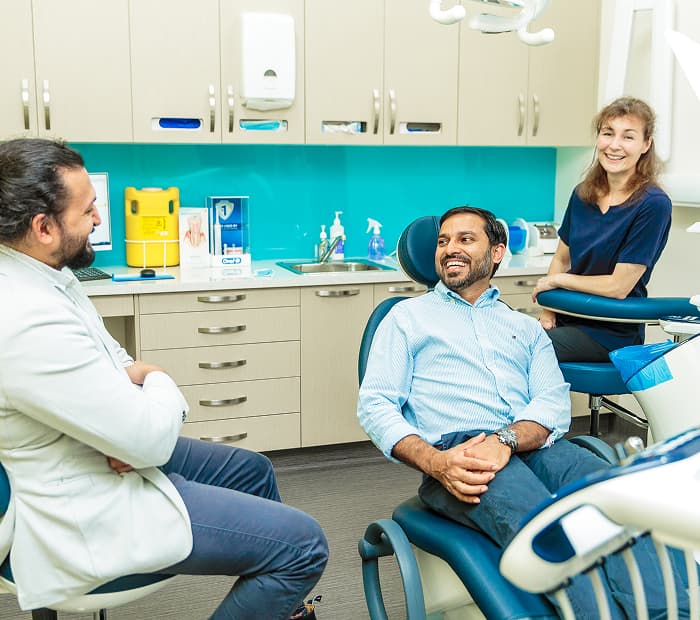
A dentist and a dental nurse talking with a patient seated in a dental chair.

Children and the first assessment

Some bite problems are easier to treat while the jaw is still growing. A dentist can advise whether your child needs an orthodontic assessment before their teenage years. You can start with kids dentistry.

At a first orthodontic appointment, the examination covers your face, teeth and bite, and a panoramic x-ray may be suggested. If you clench or grind your teeth, mention it, and read about teeth grinding.

Braces, aligners and retainers

Your dentist explains which options suit your teeth and bite.

  • Metal braces: brackets fixed to the front of your teeth and joined by wires. They have been used for around 100 years. You cannot take them off.
  • Ceramic braces: similar to metal braces but tooth-coloured, so they are less noticeable.
  • Lingual braces: metal braces stuck to the inside surface of your teeth, which makes them hard to see. They cost more.
  • Clear aligners: thin plastic trays made for you and worn over your teeth. You take them out only to eat and drink, and suitability can depend on how much correction is needed.
  • Retainers: a fixed retainer is a thin metal line attached behind your teeth. A removable one is usually worn at night. Both help keep teeth in position after treatment.
  • Visits: fitting braces can take up to an hour, and adjustments are usually every 6 to 8 weeks to change wires or add elastics.

Before You Decide

Think about the whole picture

  1. 01

    Teeth and bite

    Your dentist looks at how your teeth are placed and how your top and bottom teeth meet.

  2. 02

    Looking after your teeth

    Ask how brushing and cleaning would work while your teeth are being moved.

  3. 03

    Time and follow-up

    Ask how long treatment may take, how often you would visit and what keeps teeth in place afterwards.

  4. 04

    Wearing a retainer

    Teeth can move again if you do not wear your retainer as advised. Ask how long you would wear one and whether it would be fixed or removable.

  5. 05

    Comfort at first

    You may be uncomfortable for a couple of days after braces are fitted or adjusted. Ask what to expect and who to call if something rubs.

  6. 06

    Children and teenagers

    Some problems are easier to treat in young growing jaws. If you are asking for your child, ask whether an orthodontic assessment is worth having now.

Explore Treatments

Options to discuss at your appointment

  1. 01

    Invisalign

    Clear aligners that move teeth in steps. Find out how they work and what planning involves.

    Invisalign information
  2. 02

    Traditional Braces

    Fixed braces are one way to move teeth. Find out how they work and what to ask first.

    Traditional Braces information

Your Consultation

Time for a proper discussion

  1. 01

    Tell us your questions

    Say what you would like to change about your teeth or bite.

  2. 02

    We check your teeth and bite

    Your dentist assesses your teeth, gums and bite and explains what they find.

  3. 03

    Compare your options

    Talk through each option, the time it may take and the cost before you choose.

Request a Consult

Talk to our team

Use the form below to request a consult. Please avoid sharing sensitive health information through a website form.

Disclaimer: $50 refundable attendance deposit required to secure your appointment.
Your $50 deposit is fully refunded when you attend your consultation.

Frequently Asked Questions

Questions about Orthodontics

These general answers can help you prepare questions for an individual conversation.

An uneven smile alone is not a reason to start treatment. What matters is whether crowding, spacing or the way your teeth meet is causing a problem, and only an examination can tell you that.

The Guide to orthodontic treatment describes problems that can come with crowded teeth or an uneven bite. Crowding can make cleaning difficult, and an uneven bite can cause uneven wear or a tooth to press into the opposite gum. That is why the dentist looks at how your teeth work as well as how they look.

Try to describe what you have noticed in your own words, such as food catching in one area or a change in how your teeth meet. You do not need to name the condition. It also helps to say whether you mainly want a health reason checked or a change in appearance, because the dentist can then tell you which is which. Doing nothing, with a check-up now and then, can be a reasonable outcome too. You can read about Invisalign before you go.

Ready to Book Your Next Dental Visit?

Whether you're due for a routine check-up, have a dental concern or want to talk about a treatment, our Woonona team can help.