
Call UsBook an Appointment

Crowns and Bridges

Crowns and bridges in Woonona, understand your choices before restoring a tooth

If a tooth is cracked, heavily filled or has had a root canal, or you are missing a tooth, a crown or bridge may be one option. Your dentist checks the tooth and explains your choices. To book, call us on (02) 4284 4486 or book online.

Fees, private health benefits and third-party payment arrangements vary. Please confirm current details before relying on an option.

Crowns and Bridges

Protecting a tooth or replacing a missing one

A crown is a cap that covers a damaged tooth to protect it and restore its shape. A bridge replaces a missing tooth: an artificial tooth is joined to crowns on the teeth either side of the gap.

Your dentist explains whether a crown or bridge suits you and what else you could consider, such as dental implants. For current fees, call us on (02) 4284 4486 or read Our fees. You can also see our Patient offers.

When a crown is considered

A crown covers an existing tooth to improve how a damaged or broken tooth looks, make it stronger and restore its function. Crowns can be made of porcelain, zirconia, gold alloy or porcelain fused to metal. Your dentist might suggest one for a broken or cracked tooth, a badly decayed tooth, a tooth that has had Root canal treatment, or cosmetic issues such as stains, chips or an unusual shape.

Crowns and bridges sit within our Restorative Dentistry services.
Preparing and fitting a crown

Our crowns are made in Australian dental laboratories, and treatment is completed over two visits. At the first visit, your dentist may use a local anaesthetic. The preparation includes:

  1. Shaping the tooth to make room for the crown.
  2. Checking that the edges are smooth.
  3. Taking an impression or digital scan to design the crown.

At the second visit, your dentist fits the final crown with dental cement or adhesive and checks that it matches your bite and tooth shape.

How a bridge is supported

A bridge replaces one or more missing teeth and is fixed to your natural teeth, so you cannot take it out. The usual procedure puts a crown on the teeth either side of the gap, joined by another crown that acts as the false tooth.

You need healthy teeth on either side of the gap. Those teeth are usually filed down to prepare them, and you need more than one appointment, sometimes with a temporary bridge while the permanent one is made.

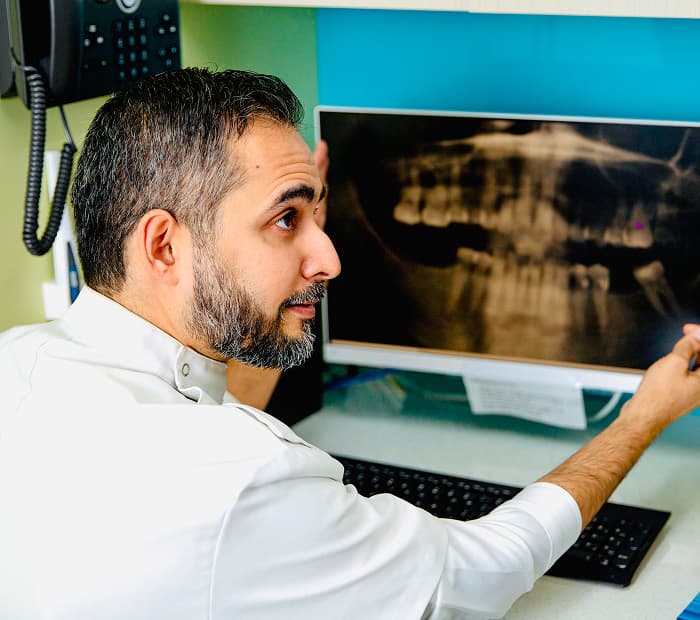
A dentist pointing to a dental X-ray on a computer screen.

Cleaning around crowns and bridges

A crown itself cannot decay, but the tooth underneath still can, so keep cleaning your teeth and gums and continue regular visits such as a Check-up and clean. Because a bridge's crowns are joined together, floss cannot pass between them, so ask your dentist what is the right way to clean beneath it, for example with superfloss, floss threaders or interdental brushes.

Possible complications

Possible complications of crowns include the crown coming loose, breaking, chipping or falling off, the tooth under it breaking, decay around or under it, sore or swollen gums around it, and a poor fit that causes pain or trouble chewing. Crowns can last for many years if they are cared for properly.

Bridges can too, but they can fail, usually because of decay in the natural teeth next to them or failure of the cement.

Other treatment choices

Alternatives to a crown include rebuilding the tooth with a filling (see Tooth fillings) or a veneer. For missing teeth, you could ask about Dentures, or a dental implant: an implant is a metal screw, usually titanium, placed in the jawbone in place of a missing tooth root, which can support a crown, bridge or denture, in stages over a few months.

For a plan that covers many teeth, read about Full mouth rehabilitation, and read Understanding the choices in a treatment plan on our blog.

You can ask for a pause or decline a proposed treatment after discussing the options and risks with your dentist.

When to ask about a crown or bridge

A dentist might suggest a crown for a broken, cracked or badly decayed tooth, or after root canal treatment, and a bridge to replace missing teeth. These are the common situations.

  • A cracked or weak tooth: A tooth has cracked or is too weak to hold a filling.
  • A large filling: An old, large filling is breaking down.
  • After root canal treatment: Your dentist may suggest a crown to protect the tooth.
  • A missing tooth: You have a gap and healthy teeth either side of it.

What happens at your visit

Your dentist explains the choices for your tooth before anything is planned, including what each involves and what happens at each visit.

  • A check of the tooth: Your dentist looks at the tooth or gap and may take an X-ray.
  • Your options explained: You hear what the choices are and what each involves.
  • A plan for treatment: Your dentist explains what happens at each of the two visits.
  • A conversation about how it will look: You talk about shape and colour so the new tooth fits in with the rest.

Frequently Asked Questions

Questions about Crowns and Bridges

These general answers can help you prepare questions for an individual conversation.

A crown covers one tooth you still have. A bridge replaces a missing tooth with an artificial tooth that is joined to crowns on the teeth either side of the gap. So a bridge uses crowns as its support, but a crown on its own does not replace anything.

If your plan mentions both words, the quickest way to understand it is to see which of your teeth would be crowned and which space would be filled. The Dental bridge guide describes how a bridge is supported, and the Guide to crowns, bridges and veneers covers both treatments.

A crown is usually suggested for a tooth that is cracked, heavily filled, badly decayed or has had root canal treatment. A bridge needs healthy teeth on both sides of the gap. If you are not sure which one fits your situation, tell the dentist what bothers you most. Our dental implants page explains another way to replace a missing tooth, and you can ask how it compares.

Related Care

Continue exploring Restorative Dentistry

  1. Services

    Restorative Dentistry

    Restorative Dentistry information
  2. Practice

    Our Fees

    See dental fees
  3. Practice

    Patient Offers

    Read patient offer terms
  4. Restorative Dentistry

    Dentures

    Dentures information
  5. Restorative Dentistry

    Full Mouth Rehabilitation

    Full Mouth Rehabilitation information

Ready to Book Your Next Dental Visit?

Whether you're due for a routine check-up, have a dental concern or want to talk about a treatment, our Woonona team can help.