Call UsBook an Appointment

Dental Implants

Dental implants in Woonona, replacing a missing tooth explained step by step

If you have lost a tooth, or are tired of a loose denture, you may be wondering about a dental implant. An implant is an artificial tooth root placed in the jaw, and your dentist can tell you whether it may suit you. To book a consultation, call us on (02) 4284 4486.

Fees, private health benefits and third-party payment arrangements vary. Please confirm current details before relying on an option.

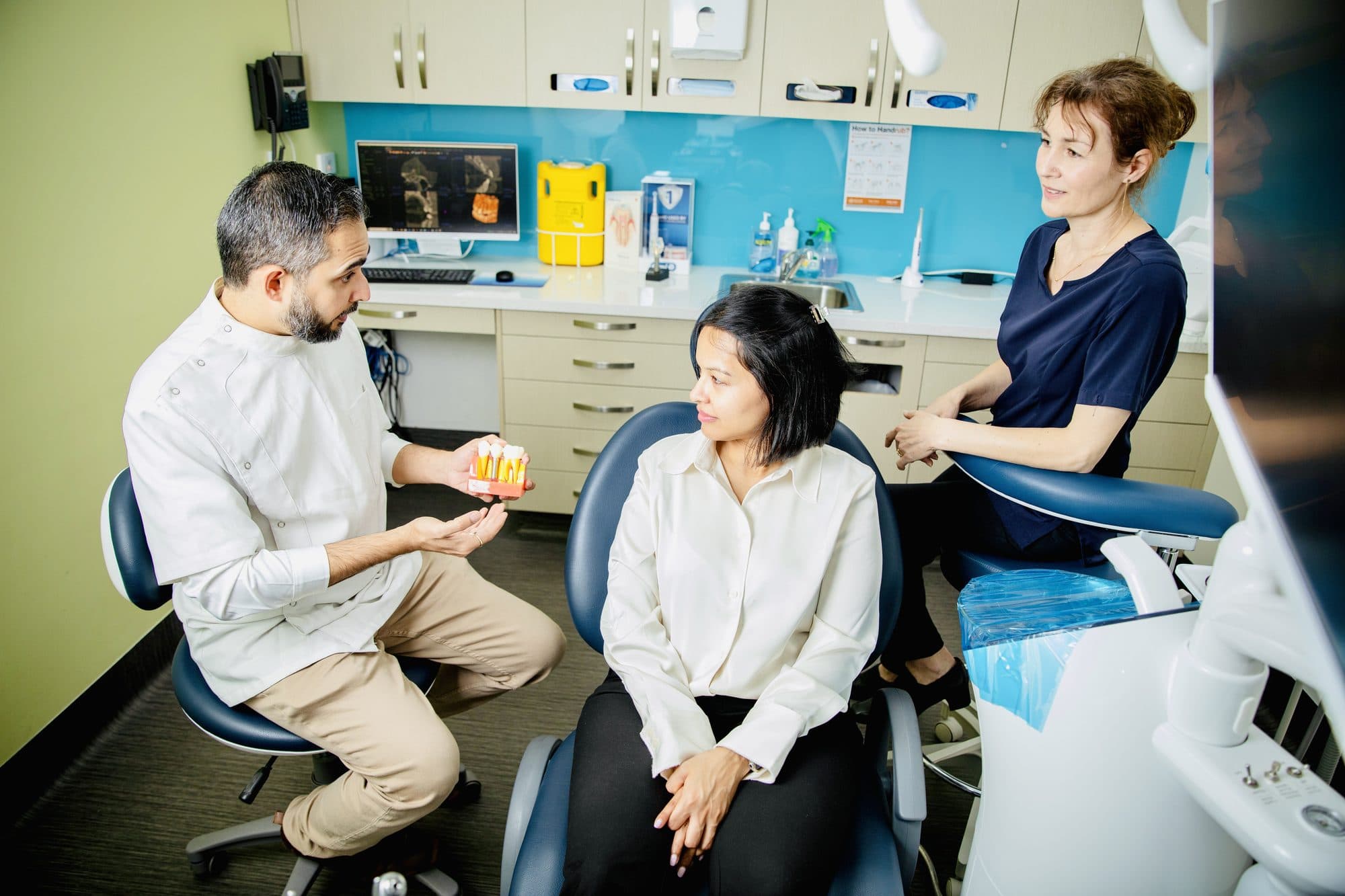
A dentist holding a dental model while speaking with a seated person.

Replacing Missing Teeth

Look at all your options

A missing tooth can be replaced in more than one way. You can talk about implants, crowns and bridges, dentures, or leaving the gap. Your dentist looks at your gums, the bone under them and your bite before explaining what may suit you.

A dentist discussing dental implant planning.

How an implant replaces a tooth

A dental implant is a metal screw, usually titanium, that is used in place of the root of a missing tooth and attached to the jawbone. An implant can support a crown, a bridge or dentures. Treatment is usually done in stages over a few months, may be done by a general dentist, periodontist or oral surgeon, and starts with x-rays and a treatment plan.

Ask who would carry out each stage.

Checks before implant treatment

Before an implant, your dentist checks that you have enough bone to hold it, and looks at your medical conditions, medicines and gum health. Tell your dentist about these factors because they can affect implant planning:

  • You are over 60.
  • You have osteoporosis, cancer or a bleeding disorder.
  • You have gum disease or diabetes.
  • You smoke.

If your gums need care first, read about gum disease treatment or book a check-up and clean.

A dentist reviewing a dental X-ray on a computer screen with a colleague.

Healing, risks and aftercare

A local anaesthetic is used so you do not feel pain during the operation, and it takes about three months for bone to grow around the implant while the crown is made in a laboratory. Possible problems include infection, nerve damage, sinus problems and injury to nearby teeth.

Once healed, an implant is cared for like your other teeth, with brushing twice a day, cleaning between your teeth and regular check-ups. Other ways to replace teeth sit under restorative dentistry.

How implant treatment is staged

This is general information. Your own plan may differ, so ask your dentist for each step.

  • X-rays and planning: x-rays show your jaw and where an implant could go. Your dentist also checks your bone, gums, medical conditions and medicines.
  • Placement: the implant is put into the jawbone in a minor operation, with a local anaesthetic so you do not feel pain.
  • Healing: it takes about three months for bone to grow around the implant, which helps hold it in place.
  • The new tooth: while the site heals, the crown is made in a laboratory. Once the implant is in place, the crown, bridge or denture is attached.
  • Aftercare: instructions may include mouthwash instead of brushing near the site for 2 to 3 weeks, and soft foods while it heals. Follow your dentist's advice.
  • Costs: implants can be expensive, so know all the costs before you start and ask for a quotation. If you have private health insurance, ask whether it covers some of the cost.
  • Alternatives: Removable dentures and a bridge attached to the surrounding teeth are other ways to replace a missing tooth. Ask which your dentist would suggest and why.
  • Your questions: take time to ask questions before surgery. Your dentist needs to explain your options so that you can give informed consent.

Points To Discuss

More than one thing matters

  1. 01

    Your mouth and health

    Your gums, bone, general health and habits such as smoking can all affect planning.

  2. 02

    The other options

    Ask what else could replace the tooth, so you can compare it with an implant.

  3. 03

    Looking after it

    Ask what cleaning and check-ups an implant needs, and how long the whole process may take.

  4. 04

    Medical conditions and smoking

    Before an implant, tell your dentist about osteoporosis, cancer, bleeding disorders, gum disease, diabetes, smoking and your age.

  5. 05

    Who does each stage

    A general dentist, periodontist or oral surgeon may do the treatment. Ask who would plan it, who would place the implant and who would fit the tooth.

  6. 06

    Recovery and risks

    After the operation you might have bruising, pain, swelling or bleeding. Ask what to expect and who to call if you are worried.

Your Consultation

Gather the facts first

  1. 01

    Tell us your situation

    Say which tooth or teeth are missing and what you would like to be able to do.

  2. 02

    We assess your mouth

    Your dentist checks your teeth, gums and bite, and may suggest further checks before planning.

  3. 03

    Review the plan

    Go through the options, the steps, the time and the cost before you decide.

Request a Consult

Talk to our team

Use the form below to request a consult. Please avoid sharing sensitive health information through a website form.

Disclaimer: $50 refundable attendance deposit required to secure your appointment.
Your $50 deposit is fully refunded when you attend your consultation.

Frequently Asked Questions

Questions about Dental Implants

These general answers can help you prepare questions for an individual conversation.

Only an examination can answer this, but a few things usually decide it: the amount of bone in your jaw, the health of your gums, your general health and the medicines you take. Information about dental implant says your dentist checks your bone and gums and asks about medical conditions and medicines. Mention anything on its list, including osteoporosis, cancer, bleeding disorders, diabetes and smoking.

Being a candidate is rarely a simple yes or no. You might be asked to treat gum problems first, to wait, or to consider a different way of replacing the tooth. Smoking is worth raising openly, because Information about smoking and oral health says smoking and vaping may mean less success with implants.

Bring a list of your medicines, including anything you buy without a prescription. If your gums are not in good shape, a check-up and clean is a sensible first step. Ask your dentist to explain in plain words what they found and what, if anything, would change their advice. Your dentist can only tell you what applies to your own mouth, so treat any general list as a set of questions, not a verdict.

Ready to Book Your Next Dental Visit?

Whether you're due for a routine check-up, have a dental concern or want to talk about a treatment, our Woonona team can help.