Everyday Care
Can you use a water flosser with dental crowns? Cleaning tips and what to watch for
Yes, you can usually use a water flosser with a permanent dental crown. Learn temporary vs permanent crown rules, angle and pressure settings, tool trade-offs and warning signs.
27 November 2026
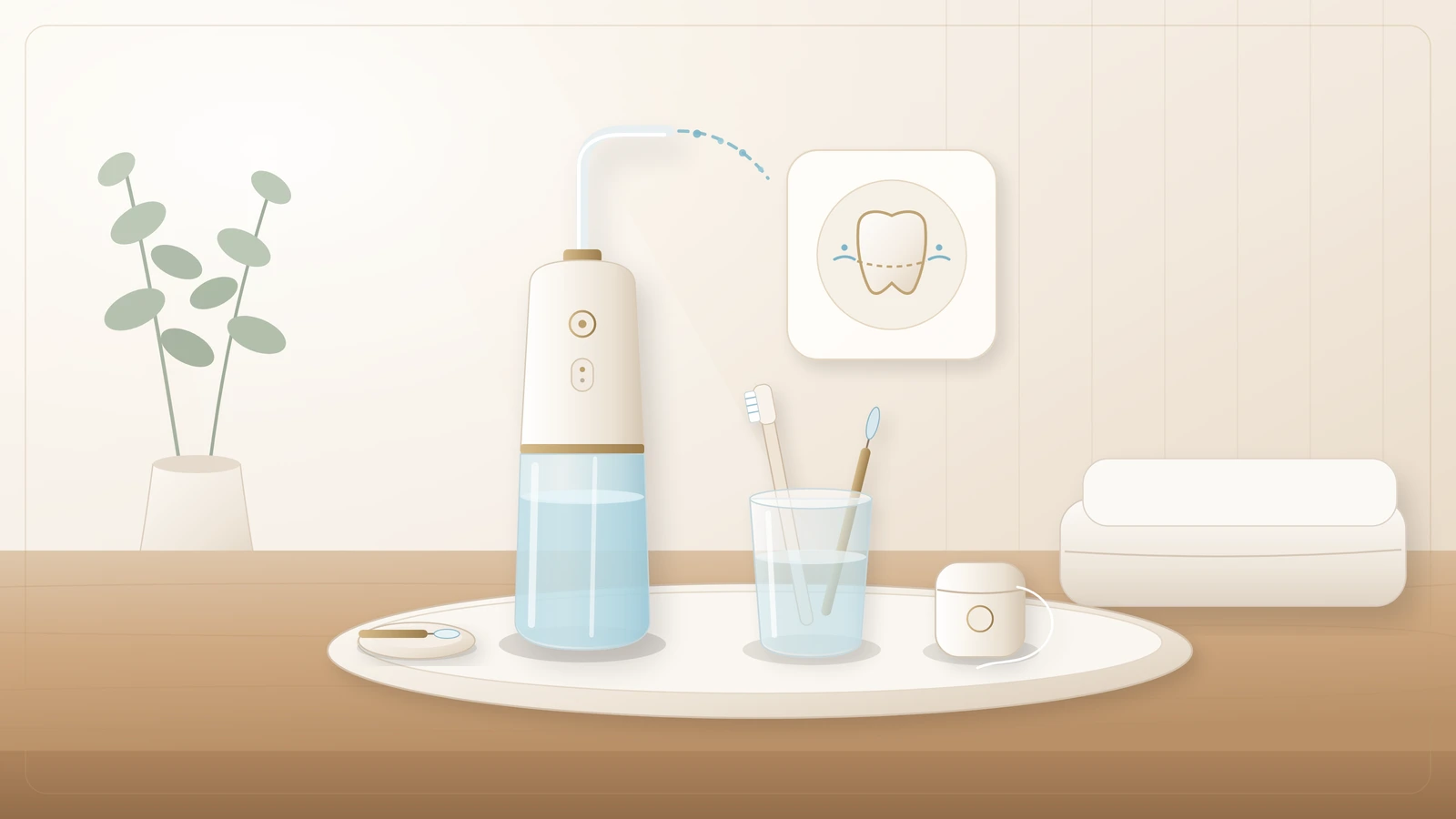
Yes — in most situations, you can use a water flosser with a cemented permanent dental crown. The Australian Dental Association (ADA) flossing guide lists dental crowns among the situations where a water flosser can be helpful, because a gentle stream of water flushes away trapped food, bacteria and loose plaque around margins and back teeth.
The main distinction is whether your crown is temporary or permanent, alongside how you aim the jet and set the pressure. A temporary crown placed between laboratory visits uses weaker cement and should not be blasted with high-pressure water. For a permanent crown, lukewarm water on a low-to-medium setting aimed at 90 degrees along the gumline supports daily cleaning — while still working alongside brushing and mechanical interdental care rather than always replacing string floss or interdental brushes. You can read how we prepare and maintain restorations on our crowns and bridges page.
Why cleaning around the crown margin matters
A common misconception is that a crowned tooth no longer needs careful cleaning between teeth. While porcelain, zirconia, gold alloy or porcelain-fused-to-metal cannot decay, both Healthdirect and the ADA stress that the natural tooth underneath still can — especially at the margin where the edge of the crown meets the tooth near the gumline.
A toothbrush alone cannot reach the narrow spaces between teeth or right under tight contact points. If plaque and food particles sit undisturbed along a crown margin, bacteria can trigger gum inflammation (gingivitis), which may show up as redness, swelling or bleeding. The ADA gum diseases guide and the Australian and New Zealand Academy of Prosthodontists (AANZP) explain that uncontrolled gum inflammation can progress to periodontitis, causing bone loss that exposes the crown edge and threatens the tooth's support. For a broader look at crown risks and upkeep, see our guide to dental crown downsides and care.
Temporary crowns vs permanent crowns: two different rules
How you use a water flosser depends first on which stage of crown treatment you are in. At Woonona Dentists, crowns are made in Australian dental laboratories over two appointments. At Visit 1, your dentist prepares the tooth, takes an impression or digital scan, and places a temporary plastic crown where appropriate until your final crown returns for Visit 2.
If you are wearing a temporary crown
A temporary crown is fitted with deliberately lighter temporary cement so your dentist can remove it cleanly at your second appointment. Because that seal is much weaker than final cement, avoid high-pressure water jets directly around a temporary crown. Strong water pressure directed at the edge can lift or dislodge the temporary cap, or irritate tender gums around a newly shaped tooth.
- Ask your dentist before leaving Visit 1 whether to pause water flossing on that tooth until the final crown is fitted, or whether an ultra-low rinse away from the margin is appropriate.
- When using string floss next to a temporary crown, gently guide it between the teeth and slide it out sideways through the side of the gap instead of pulling upward against the temporary edge.
- Keep brushing gently twice daily with fluoride toothpaste, and avoid hard or sticky foods that can tug a temporary crown loose.
Once your permanent crown is cemented
At Visit 2, your dentist checks the fit, margin smoothness and bite before securing your final crown with dental cement or adhesive. Once your dentist confirms you can resume normal home care, a well-fitted permanent crown can handle gentle daily water flossing on a low-to-medium pressure setting. If the tooth feels tender for the first day or two after fitting, use lukewarm water and start on the lowest pressure while the surrounding gum settles.
How to use a water flosser around permanent crowns: step-by-step
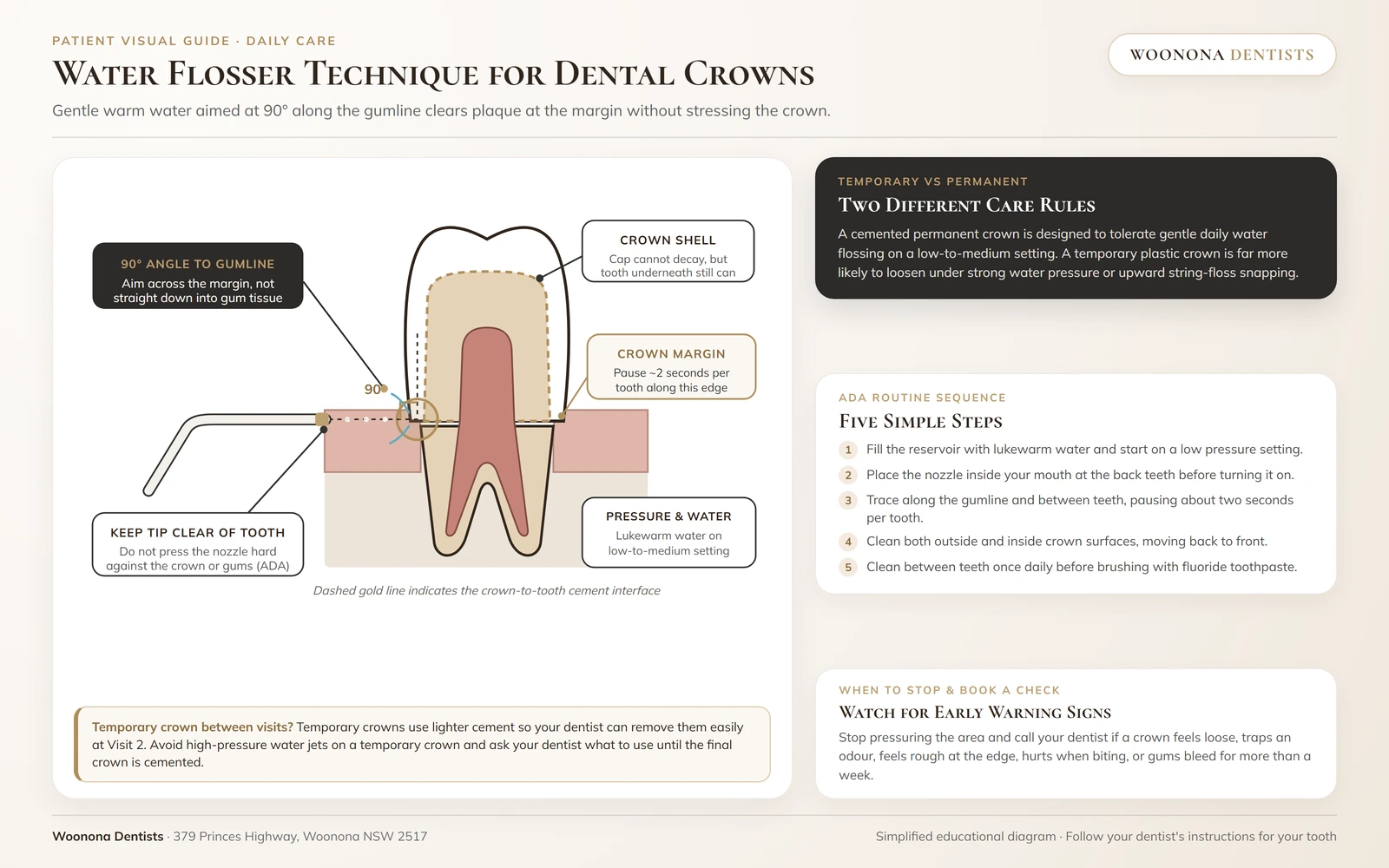
Good technique protects both your gum tissue and the crown margin while keeping splash to a minimum. The ADA flossing guide outlines practical steps for using an oral irrigator, which you can adapt around permanent crowns:
- Fill the reservoir with lukewarm water. Very cold water can trigger sharp sensitivity on a recently crowned tooth or nearby exposed root surfaces.
- Start on a low-to-medium pressure setting. You do not need maximum pressure to flush debris from a crown margin; steady, gentle pulsation cleans without bruising tender gums.
- Lean over the basin, place the nozzle inside your mouth starting at the back teeth, and partly close your lips around the handle before switching the unit on.
- Aim the water stream at a 90-degree angle along the gumline and trace the margin where the crown meets the gum. Follow the ADA guidance to keep the tip parallel to the tooth surface and do not press the nozzle directly against the crown or gums.
- Pause for about two seconds on each tooth and briefly between neighbouring teeth so the stream flushes food and loose plaque out of the interdental space.
- Work methodically from the back teeth toward the front, cleaning both the outside (cheek-side) and inside (tongue- or palate-side) surfaces of every crowned tooth.
- Clean between your teeth at least once a day before brushing (ADA). Loosening debris first lets your fluoride toothpaste reach the tooth surfaces when you brush for two minutes afterwards.
Does a water flosser replace string floss or interdental brushes?
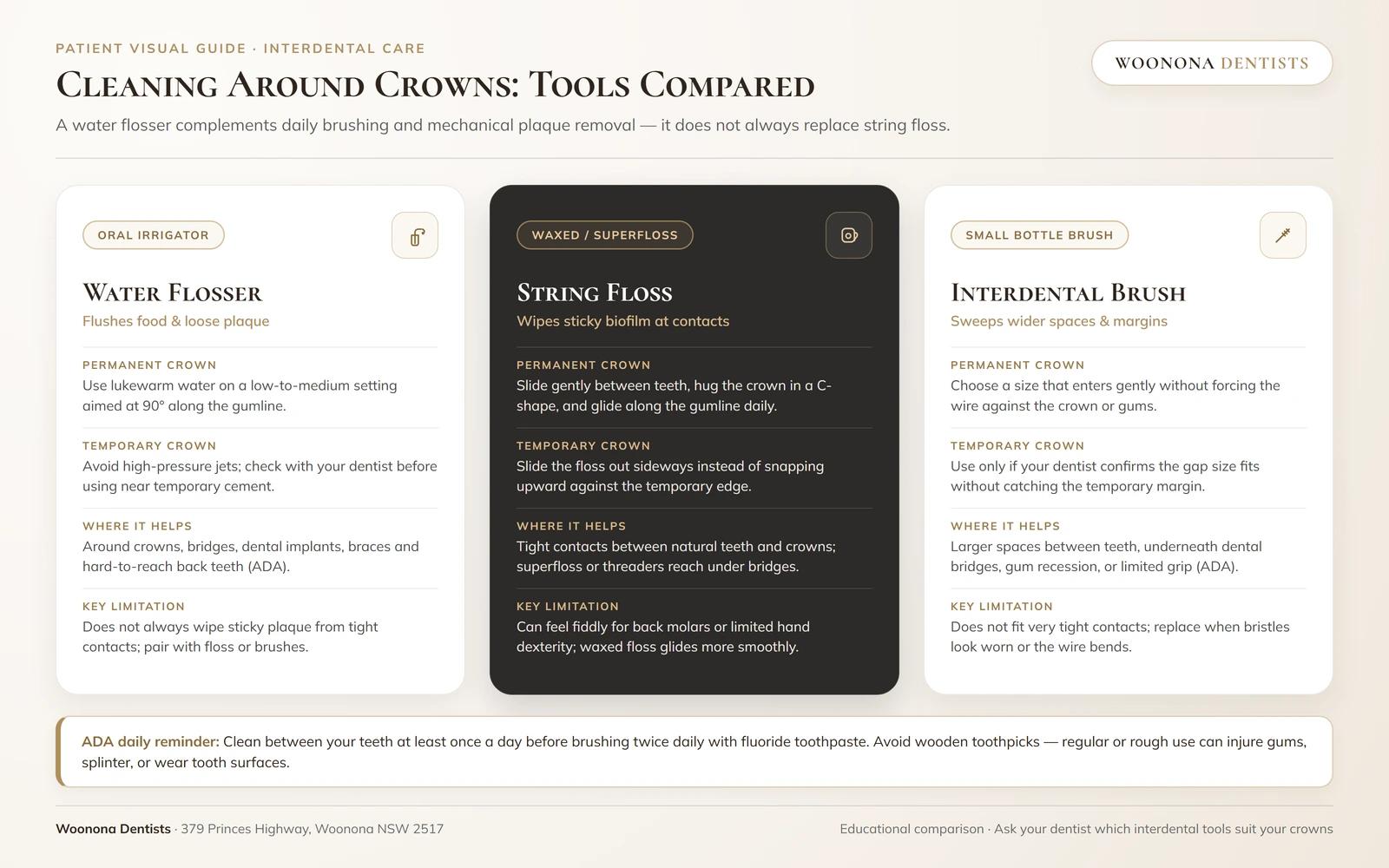
For many people with crowns, a water flosser works as a helpful companion rather than a complete standalone substitute for mechanical cleaning. Sticky dental plaque (biofilm) clings closely to smooth enamel and crown margins where two teeth touch tightly. A water stream flushes away loose food debris and disrupts plaque along the gumline, yet physical contact from waxed string floss or a correctly sized interdental brush is often still useful to wipe tightly packed surfaces clean.
Both the ADA and Better Health Channel note that several interdental tools exist — string floss, flossettes, interdental brushes and water flossers — and the right combination depends on the shape of your gaps, your restorations and your hand dexterity. One tool the ADA explicitly advises against is wooden toothpicks: regular or rough use can injure gums, splinter inside soft tissue, or gradually wear teeth.
| Tool | Permanent crown role | Temporary crown rule | Strengths and limits to discuss |
|---|---|---|---|
| Water flosser (oral irrigator) | Flushes food debris and loose plaque along the gumline margin at 90 degrees on low-to-medium warm water. | Avoid high-pressure water jets; ask your dentist before using near a temporary crown. | Helpful for back molars, bridges, implants, braces and limited hand grip (ADA). May not wipe sticky plaque from very tight contact points on its own. |
| String floss (waxed or superfloss) | Wipes plaque directly off tight contact surfaces using a gentle C-shape hug along the margin. | Glide gently and slide the floss out sideways — never snap it upward against the temporary edge. | Reaches snug contacts between crowns and adjacent teeth. Superfloss or floss threaders reach beneath joined bridge pontics (Healthdirect). |
| Interdental brush | Sweeps wider interdental spaces, exposed margins and bridge bases without forcing the wire. | Use only if your dentist confirms the size enters easily without catching the temporary crown. | Useful where spaces are wider or gums have receded (ADA). Too bulky for tight contacts; replace when bristles wear or the wire bends. |
Single crowns, dental bridges and implant crowns: what changes?
Not every crown sits on the same foundation, so your cleaning routine should match the type of restoration in your mouth:
- Single crown on a natural tooth: You can clean the sides with standard waxed string floss or a snugly sized interdental brush, and flush around the gumline margin with a low-to-medium water flosser. Keep brushing twice daily for two minutes with fluoride toothpaste (ADA brushing guide).
- Dental bridge: Because a bridge joins crowns on neighbouring teeth to an artificial tooth spanning a gap, ordinary floss cannot pass straight down between the joined units. Both Healthdirect's dental bridge guide and our crowns and bridges page recommend asking your dentist about superfloss, floss threaders or interdental brushes to clean underneath the false tooth, and a water flosser can help flush food trapped beneath that span.
- Implant-supported crown: A crown anchored to a dental implant does not decay, yet the surrounding gum and bone still require daily plaque control. The ADA notes water flossers can help clean around dental implants once healing is complete. Never direct pressurised water at a fresh surgical or healing site until your dentist confirms the tissue is ready.
If your device includes several attachments — such as a standard jet tip or a soft bristle-tuft tip designed for dental work — bring your questions to your next check-up and clean. Your dentist can check the exact tightness of your margins and show you which nozzle and pressure level suit your mouth.
Can a water flosser loosen a permanent crown?
Normal gentle use of a water flosser on a low-to-medium setting does not loosen a healthy, properly cemented permanent crown. Final dental cements and bonding resins are built to withstand daily chewing forces that are far stronger than a domestic water jet.
If a permanent crown ever feels loose or comes off while you are flossing or water flossing, cleaning is usually revealing an existing underlying issue rather than causing it. Healthdirect and the AANZP note that crowns can loosen due to decay forming in the natural tooth underneath, gradual wear or breakdown of the cement seal over time, a fracture in the underlying tooth, or heavy biting forces such as night-time teeth grinding. If you grind your teeth and wear a splint, read our guide to night guard fit after a dental crown and bring your guard to crown visits.
What to watch for: signs your crown or gums need a check
Pay attention to how the area feels and looks each time you clean around a crown. Contact a dentist for an examination if you notice any of the following:
- A bad taste or persistent odour when flossing around the crown: Trapped food or bacteria under a leaking margin, early decay under the edge, or a deep gum pocket can produce a noticeable smell when disturbed.
- Gums that keep bleeding or look swollen: The ADA explains that inflamed gums often bleed when you first begin daily interdental cleaning — do not stop cleaning right away, as steady plaque removal helps mild inflammation settle. However, healthy gums do not bleed; if bleeding persists after regular daily care, book a check to rule out gum disease or a rough margin. See our guide on bleeding gums when brushing.
- Any movement, rocking or clicking when you bite or touch the crown with your tongue.
- A rough ledge, sharp chip or floss shredding repeatedly in the same spot, which can signal a chipped porcelain edge or open margin.
- Pain when chewing or sensitivity that lingers after hot, cold or sweet drinks, which Healthdirect notes can point to a high bite, margin leak or nerve irritation underneath.
- A crown that falls off completely: Keep the crown clean in a small container, avoid chewing on that side, never use household glue, and contact our clinic or check our emergency dentist page. If you ever have trouble breathing or swallowing after a mouth injury or swelling, call 000 or go to an emergency department immediately.
Frequently asked questions about water flossers and dental crowns
Can a water flosser loosen or knock off a permanent dental crown?
- Gentle daily use on a low-to-medium setting does not loosen a properly bonded permanent crown. If a permanent crown moves or comes off during water flossing, it usually indicates an underlying issue such as worn cement, decay beneath the margin or a cracked tooth underneath, and your dentist should assess it promptly.
Can I use a water flosser on a temporary crown while waiting for my final crown?
- Avoid high-pressure water jets on a temporary crown. Temporary crowns are placed with weaker cement between Visit 1 and Visit 2 so they can be removed easily when your laboratory crown arrives. Ask your dentist before leaving your first appointment whether to skip water flossing on that tooth until the final crown is cemented.
Does a water flosser replace string floss around dental crowns?
- Not always. A water flosser is helpful for flushing debris and loose plaque around crowns, bridges, implants and hard-to-reach back teeth, yet waxed string floss or a correctly sized interdental brush provides direct physical wiping across tight contacts. Many patients use a water flosser alongside floss or interdental brushes based on their dentist's advice.
What water temperature and pressure setting should I use around a crown?
- Use lukewarm water and start on a low-to-medium pressure setting, aiming the nozzle at 90 degrees along the gumline without pressing the tip directly against the tooth or gums. Cold water or maximum pressure can trigger sensitivity or irritate gum tissue without improving routine plaque clearance.
Why does it smell when I floss or water floss around my dental crown?
- A noticeable odour around a crown often comes from trapped food debris and plaque bacteria sitting at the gumline margin or inside an inflamed gum pocket, and sometimes signals a loose seal or decay underneath the edge. Keep cleaning gently and book a dental check-up so your dentist can inspect the margin and gums.
Can a tooth still decay under a dental crown even if I use a water flosser?
- Yes. Healthdirect and the ADA both note that although the crown cap itself cannot decay, the natural tooth underneath remains vulnerable at the gumline margin. Daily interdental cleaning, brushing twice daily with fluoride toothpaste, limiting frequent sugary snacks and attending regular check-ups all work together to protect the margin.
What should I do if my gums bleed when I water floss around a crown?
- Mild bleeding can happen when gums are inflamed from plaque build-up. The ADA advises not to stop cleaning between your teeth immediately — keep pressure low and gentle, and clean once daily. Because healthy gums do not bleed, book a check-up with your dentist if bleeding continues so they can check for gum disease or margin irritation.
Have a crown checked in Woonona
If you are unsure which interdental tools fit your crowns, or a crown feels rough, sensitive or loose, call (02) 4214 4002 to book a check-up or crown review. Woonona Dentists is at 379 Princes Highway, Woonona NSW 2517 (next door to FMP Medical Centre, with free rear parking via Haddon Lane), open Monday–Friday 8:00 am–6:00 pm and Saturday 8:00 am–5:00 pm. You can also view Dr Beena Kurian's profile or visit our contact page before your visit — ask our team to confirm the appointment fee when you book.
Sources
- Australian Dental Association (ADA): Flossing, Brushing teeth, Crowns, bridges and veneers and Gum diseases.
- healthdirect: Dental crown procedure (reviewed February 2025), Dental bridge (reviewed February 2025) and Dental care and teeth cleaning.
- Australian and New Zealand Academy of Prosthodontists (AANZP): Dental crowns and bridges.
- Better Health Channel: Teeth and mouth care.
- Woonona Dentists: crowns and bridges, check-up and clean, gum disease treatment, dental implants and contact details.
Sources accessed 27 November 2026. General information only, not personal dental advice; see your dentist for an assessment tailored to your teeth and restorations.