Treatment Planning
Getting a crown when you already wear a night guard
A crown can change how your night guard fits. What the ADA says, how crown appointments line up, and what to ask about adjustment and costs.
1 November 2026
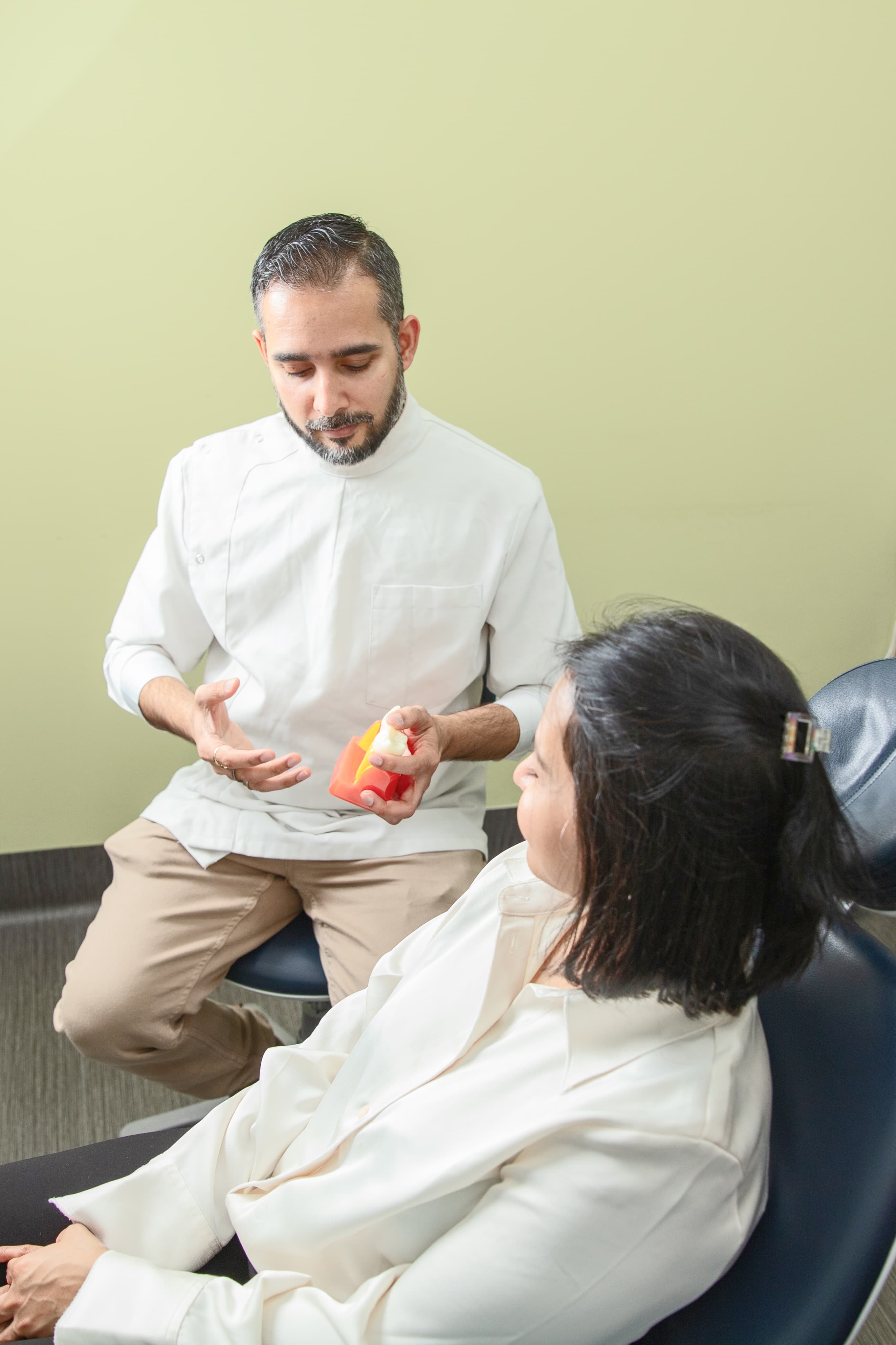
Your dentist has suggested a crown, and you already wear a night guard that has fitted well for years. A fair question follows: will the guard still fit once the tooth has changed shape, and will you need to pay for a new one?
Not necessarily. The Australian Dental Association (ADA) says a splint may need adjustment after a crown, or replacement if it cannot be adjusted to fit. Woonona Dentists' crown page describes preparation, a temporary crown and a final fit check. Bring your guard and ask how its fit will be checked during your treatment. Read the ADA's teeth grinding guide.
Will my night guard still fit after a crown?
It might, or it might need some work. A crown fits over a tooth that has been cut back and reshaped, as the ADA's crowns guide explains. Your night guard was made to fit that tooth as it was before. Once the surface changes, the guard can sit differently.
The ADA's teeth grinding guide covers this exact situation in its section on occlusal splints:
“If you have dental treatments that change the shape of a tooth or teeth, such as a dental crown, your splint may need to be adjusted or replaced if it cannot be adjusted to fit back in your mouth.”
Australian Dental Association, Teeth grinding, “Occlusal splints” section, checked 2 November 2026.
Notice the order in that sentence. Adjustment comes first, and replacement is the fallback when a guard cannot be adjusted to fit. So a crown does not automatically mean a new guard. It also does not mean your old one will carry on fitting unchanged. The useful question is whether it still fits your teeth after the crown, not how old it is.
What does a night guard do, and what can't it do?
A night guard, which the ADA also calls an occlusal splint or bite splint, is a custom-made hard-plastic appliance that fits over the upper or lower teeth. It covers only part of the teeth and not the gums. The ADA says it protects teeth from wear and damage caused by grinding and clenching and decreases strain on the face and mouth muscles and the jaw joints. It will not stop you grinding.
That last point matters when you are having a crown. The ADA says a splint does not stop grinding, so raise the guard early in the crown conversation rather than after the final crown is fitted.
| Treatment or appliance | What the source says it does |
|---|---|
| Dental crown | A cap fitted over a tooth that has been cut back. The ADA says it can make the tooth stronger and protect it, and may be recommended for a badly broken, cracked or decayed tooth or after root canal treatment. |
| Night guard (occlusal splint) | A custom hard-plastic appliance worn over the upper or lower teeth. The ADA says it protects against grinding wear but does not stop the grinding. |
| Sports mouthguard | A different appliance from an occlusal splint, according to the ADA. If you have both, tell your dentist which one you are asking about. |
How do crown appointments line up with your guard?
Our crowns and bridges page says our crowns are made in Australia. It describes preparing the tooth, taking a digital impression for the dental laboratory, wearing a temporary crown and checking the final crown's fit before cementing it. The ADA explains that crown treatment often takes two appointments. Here is how that general sequence lines up with the guard you already wear:
- First visit: the ADA describes reshaping the tooth to make space for the crown and taking an impression or digital scan for the laboratory. Woonona's published process uses a digital impression.
- Between visits: the ADA's crowns guide describes a temporary plastic crown being placed over the reshaped tooth before you leave the first appointment.
- Second visit: the ADA describes removing the temporary crown and gluing or cementing the new crown onto the tooth. Woonona's page also describes checking the final crown's fit before cementing it.
- After the final crown: ask whether your guard needs a fit check, an adjustment or, if it cannot be adjusted, a replacement.
Ask your dentist what to do with your guard while the temporary crown is in place. A general article cannot tell you whether to wear it during that stage, because the answer depends on your own teeth and the temporary crown. Take the instruction your dentist gives for your situation.
The ADA also notes that some dentists provide same-day crowns. Ask how your own appointments will be scheduled when you book; this general sequence is not a promise about your treatment timing.
What are the signs your guard needs checking sooner?
The ADA says a splint that no longer fits, has bent out of shape, or is worn or broken will need to be replaced. Contact us before your next routine visit if you notice any of the following:
- The guard no longer fits the way it did, for example after your new crown is fitted.
- It looks bent out of shape, worn or broken.
- You have new symptoms that healthdirect links with grinding, such as cracked or chipped teeth, damaged fillings, painful jaw muscles in the morning, headaches or sensitive teeth.
Healthdirect advises talking to your dentist or doctor if you have symptoms of teeth grinding. A symptom on its own does not tell you the cause, so describe what changed and when, including whether it started after the crown. Bring your guard so the dentist can check it, as the ADA recommends for routine examinations.
Do I still need a guard at all?
Not everyone who grinds needs treatment, according to both the ADA and healthdirect, and the ADA adds that not everyone who grinds or clenches needs an occlusal splint. Healthdirect lists other approaches too: relaxation techniques, counselling, good sleep habits, avoiding stimulants and caffeine, dental treatment to repair damaged teeth, physiotherapy for jaw muscle pain and medical treatment for linked conditions. It says it is common to use more than one approach.
Healthdirect also notes that people who grind in their sleep may be more likely to have other sleep disorders, such as sleep apnoea, and that a dentist who finds sleep bruxism may refer you to a doctor to be checked. The ADA lists snoring among the factors linked with grinding. If someone has told you that you snore, mention it.
So a crown appointment is a reasonable time to ask a wider question: is a guard still the right approach for you? Our teeth grinding page explains how we look at grinding and what a guard can and cannot do.
| Source | What it adds |
|---|---|
| Australian Dental Association (teeth.org.au) | A splint may need adjusting, or replacing, after a crown changes a tooth's shape. Take your splint to routine examinations. Not everyone needs a splint. |
| healthdirect (last reviewed October 2023) | Your dentist asks about symptoms, sleep habits, general health and medicines. Treatment can combine more than one approach. |
The two sources answer related but different questions. The ADA focuses on the appliance and how it fits; healthdirect looks at grinding as a whole. Read together, they point to bringing both the guard and an update on your symptoms.
How do I look after the guard and the new crown?
For the guard, the ADA recommends keeping it dry in a protective case and brushing the inside and outside surfaces with soft liquid soap, a spare toothbrush and cool water. Ask your dentist how this guidance applies to your own guard.
For the crown, the ADA's crowns guide says to brush twice a day with fluoride toothpaste and clean between your teeth every day. It also points out that a crowned tooth can still be damaged by decay, and that a crown can chip or fracture. A crown does not end the need for regular check-ups, and those check-ups are a natural time to bring the guard as well.
What will it cost, and will my health fund help?
Our fees page lists a starting price for an occlusal splint (night guard). That figure is a general guide for a guard, not a quote for adjusting the one you have, and not a sign that you need a replacement. Healthdirect's cost of dental care guide explains that there are no standard fees for dentists in Australia, that each clinic sets its own fees, and that most dental care is not covered by Medicare.
Our fees page also explains that we provide a written treatment plan with itemised costs and Australian Dental Association (ADA) item numbers, the codes for each dental service. Ask for any guard work to appear as its own line, separate from the crown, so you can see exactly what is proposed and check it with your health fund.
Checklist before you agree to guard work
- Is the recommendation to check, adjust or replace the guard?
- What is the fee for that specific step, and are follow-up adjustments included?
- Which item numbers apply, so I can check them with my health fund?
- What should I do with the guard while I have the temporary crown?
- When will the fit be checked after the final crown?
Ask your fund what your policy includes for the proposed item numbers. A published starting price is not your out-of-pocket cost. Woonona's fees page says you receive a written treatment plan to review at your own pace before making decisions. Our guide to treatment choices has questions to ask while you compare recommendations.
What should I bring to my Woonona appointment?
Bring the guard itself, in its case. The ADA recommends taking a splint to routine dental examinations so your dentist can check it is still working properly. Healthdirect says your dentist will ask about your symptoms, sleep habits, general health and medicines, so a short note covering those four things saves trying to remember on the day.
When you book, you could say: “I'm having a crown and I already wear a night guard. Can we check whether the guard will still fit, and talk through any costs?”
Call (02) 4284 4486. Woonona Dentists is at 379 Princes Highway, Woonona, with parking at the rear entered through Haddon Lane. Our contact page lists hours as Monday to Friday, 8 am to 6 pm, and Saturday, 8 am to 5 pm. Ask about appointment availability when you call.
Sources
- Australian Dental Association: Teeth grinding, including occlusal splints, fit after a crown, splint care and who needs treatment.
- Australian Dental Association: Crowns, bridges and veneers, including how a crown is made, the temporary crown and caring for crowns.
- healthdirect: Teeth grinding (bruxism), last reviewed October 2023.
- healthdirect: Cost of dental care, last reviewed October 2023.
- Woonona Dentists: crowns and bridges, teeth grinding, our fees and contact details.
Sources checked 2 November 2026. This article explains general published guidance, not advice about your own teeth or appliance. Ask your dentist about your situation.